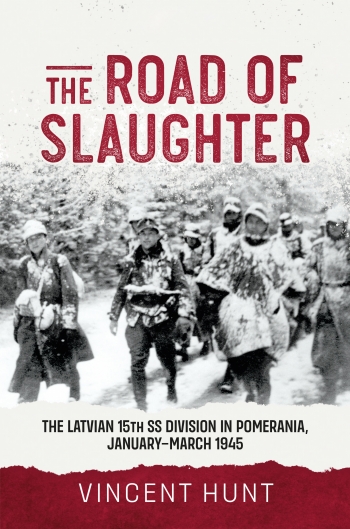
The Road of Slaughter
The Latvian 15th SS Division in Pomerania, January-March 1945
Author : Vincent Hunt
Print Editions
Paperback
£29.95 FREE UK delivery on orders over £30
Despatched within 1-2 working days
Hardback
£35.00 FREE UK delivery on orders over £30
Despatched within 1-2 working days
Digital Editions
eBook (pdf) 17.66MB
£19.99 Available for immediate download
Details
General - Pages : 448 | Images : 118 b/w photos, 26 maps, 1 table
Paperback - Date of Publication : 15th October 2024 | Edition : Reprint | Size : 234mm x 156mm | ISBN : 9781804516256 | Helion Book Code : HEL1915
Hardback - Date of Publication : 21st October 2023 | Size : 234mm x 156mm | ISBN : 9781804512593 | Helion Book Code : HEL1685
eBook - ISBN : 9781806720897




Click images to enlarge
In Arctic blizzards between January and March 1945, the Latvian 15th SS Division – a core of Russian Front veterans but most raw teenage conscripts from Nazi-occupied Latvia – tried to stop the Red Army sweeping across Pomerania, now Poland. One in three died: the majority never returned home. They became the lost Legion.
The author interviews the last remaining Latvian Legionnaires who came to the UK after the Second World War and follows their footsteps across modern Poland, adding many stories from Latvian archives, in English for the first time. Thrown in to strengthen Nazi defences as German forces collapsed, the Latvians were constantly encircled and outgunned, outrunning the merciless T-34 tanks. It was kill or be killed: even the priests had Panzerfausts.
After battles at Nakel, Immenheim, Vandsburg, Kujan, Dorotheenhof and Flatow the Latvians retreated to Jastrow. Then came a four-day period known to the Latvians as ‘the 15th Division’s Golgotha’ – the road of slaughter in the Polish countryside between Jastrow and Landeck [now Jastrowieand Lędyczek].
At Podgaje-Flederborn their column was trapped with refugees and the wounded on a single road, sitting ducks for Red Army gunners. The result was a massacre: up to 5,000 Latvian soldiers may have been killed here. What is certain, from these eyewitness accounts, is that it was appalling.
From Danzig to the Oder, this is the story of an exhausting seven-week retreat from certain death along roads choked with refugees, with danger lurking around every bend. Through new interviews, translated personal diaries and extracts from the 15th Division war diary – only found in 2006 and never before published – the harrowing stories of the Latvians in Pomerania can now be told.
English translations of the memoirs of officers Colonel Vilis Janums, Major Jūlijs Ķīlītis, chaplain Kazimirs Ručs (later Monsignor) and many others bring vivid and often-shocking eyewitness testimony to events at Podgaje-Flederborn and Ledyczek-Landeck. The original orders from The Road of Slaughter are reproduced from the War Diary in the National Archives in Riga revealing a catalogue of chaos, confusion and carnage. The casualty lists make for sombre reading, as do accounts of disturbing incidents that warrant further investigation.
With chilling echoes of the modern conflict in Ukraine, this is an exhausting and blood-soaked seven-week retreat across Pomerania to the Baltic coast, culminating in a dramatic escape across the river Oder into Germany. Memoirs and autobiographies from Latvians who subsequently settled in Australia, Canada and the USA add new detail to this horrifying chapter.
The story of what happened once the Latvians crossed into Germany continues in the author’s forthcoming books.
An additional note about the revised paperback edition
The Road of Slaughter is a collection of eyewitness accounts tracking the experiences of the Latvian Legion’s 15th SS Division fighting the Red Army in Pomerania - an untold story from the Eastern Front between January and March 1945.
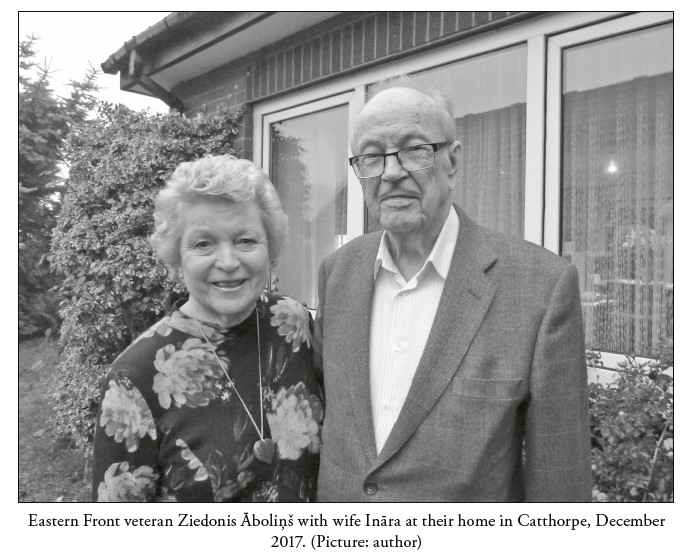
The lucky ones surrendered to the Allies, later coming to the UK in a labour replacement scheme called the European Volunteer Workers’ scheme. I interviewed ‘the last of the Legionnaires’ in a period between 2017 and 2022 at various locations across the UK.
Then in their 90s they told stories of continual Red Army encirclements in sub-zero blizzards, particularly on one road where they and hundreds of refugees and wounded men were sitting ducks for Soviet artillery and machine guns. In one incident at Flederborn (now Podgaje), 32 Polish prisoners were murdered. The Latvians had been blamed for this ever since, so I went there to look further into this episode.
When the book was first published in hardback in October 2023, some of the sons and daughters got in touch to pass on stories their fathers had told them about this episode.
One was Valdis Lusis, whose father Arvids had saved the life of his commanding officer during a mass assault on a Red Army roadblock to break the Road of Slaughter encirclement at Landeck (now Ledyczek). His father kept his cap badges, whistle, camp spoon and notably the Iron Cross he was awarded for this heroism for the rest of his life.
A Dutch SS unit in Flederborn shot the Polish prisoners on an ‘icy pond’, Arvids had told his son, and the Latvians were ordered to move the bodies. Then another Legionnaire’s son came to a book launch. As a child, he overheard his father discussing this issue with a friend at a Midsummer Night celebration. “The Germans did it,” his friend said. “What could we do?” These details are new material facts, albeit eighty years later, and clearly needed to be added the story.
The updated and revised second edition of The Road of Slaughter includes these stories, along with photographs of the men at the time and later in life. The book has now been translated into Polish, and hopefully this new evidence may prompt a Polish re-analysis of this period.
Rightly the 32 men murdered at Podgaje-Flederborn are commemorated there. But there is no memorial to the 800 Polish soldiers who died in the battle, nor any indication of the carnage that was so appalling it prompted the book’s title. We estimate that 5,000 Latvians, mostly teenage conscripts, may have died along a 15 km road.
The history of the Road of Slaughter between Jastrowie and Ledyczek is incomplete and wrong, and the details that have come from the descendants of the people who were there are now our only way of adding to what is known about the past.
"....Hunt should be commended for producing a readable account of the 15th Waffen Grenadier Division of the SS in 1945 and its subsequent legacy in Pomerania, Western Europe, and the former Soviet Union. For those interested in the closing days of World War II, the war in Pomerania, or foreigners fighting for the Nazis, Road of Slaughter is an engaging entry to the literature" Journal of Baltic Studies