
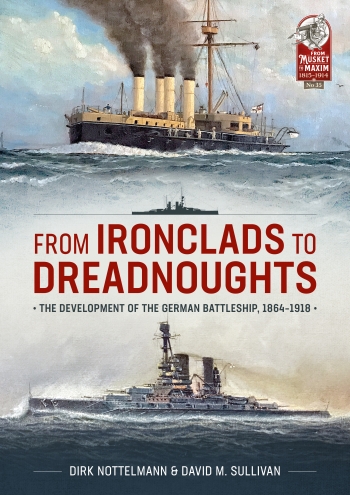
From Ironclads to Dreadnoughts
The Development of the German Battleship, 1864-1918
Series : From Musket to Maxim 1815-1914 #35
Author : Dirk Nottelmann, David M. Sullivan
Print Editions
Paperback
£59.95 FREE UK delivery on orders over £30
Despatched within 1-2 working days
Digital Editions
eBook (pdf) 52.51MB
£29.99 Available for immediate download
Details
General - Pages : 504 | Images : 432 b/w photos, 281 b/w illustrations, 2 maps, 30 tables
Paperback - Date of Publication : 8th September 2023 | Size : 297mm x 210mm | ISBN : 9781804511848 | Helion Book Code : HEL1613
eBook - ISBN : 9781806721467



Click images to enlarge
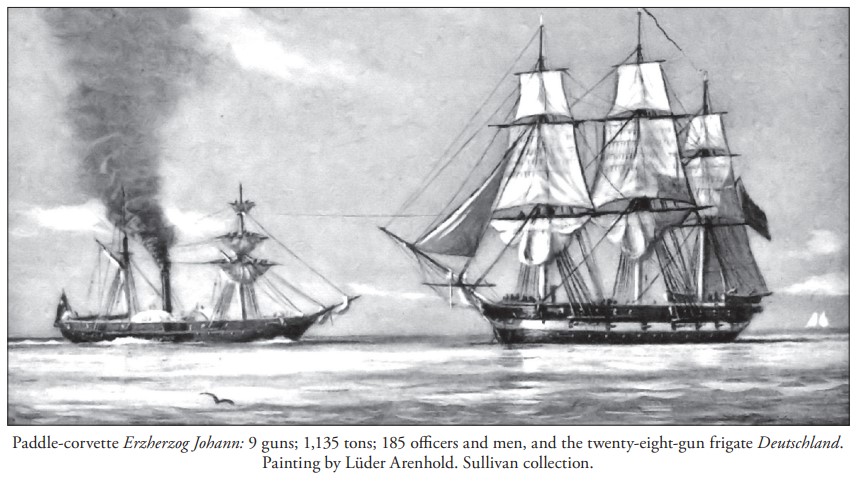
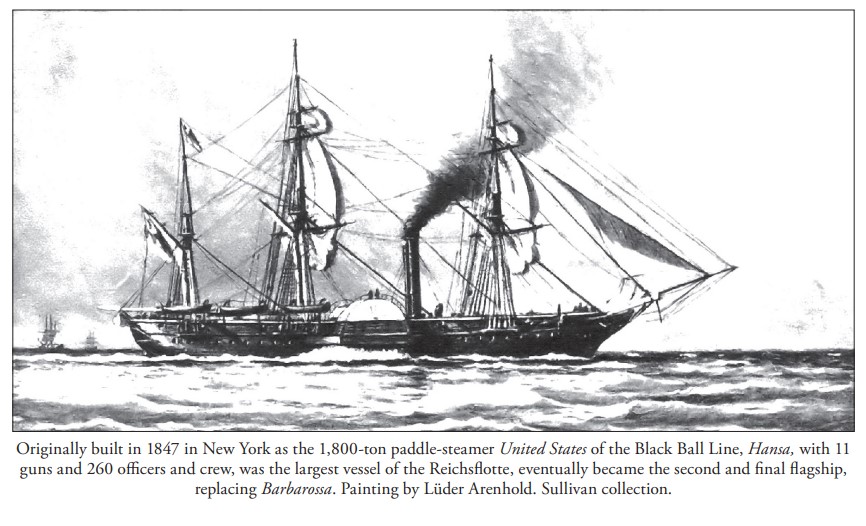
In 1864, the Prussian Navy, the core element of what would become the Imperial German Navy, acquired its first ironclad vessels from Great Britain and France. Until then, it had existed as a relatively insignificant force, mainly consisting of a handful of gunboats, corvettes, and other small craft. However, over the subsequent 50 years, the fleet would rise from these small beginnings into one capable of threatening the Royal Navy on the high seas. The development of the Imperial German Navy mirrored the rise of Germany as a technical power following unification in 1871. Still, such a rise needed more than just technical ability – it required considerable political will and economic resources.
The early chapters of From Ironclads to Dreadnoughts cover the initial purchase of ships from abroad, the switch to German shipyards, and the hesitant attempts of Emperor Wilhelm II to develop the navy. The later chapters present the fundamental changes after Alfred von Tirpitz became naval minister in 1897. They focus on the history of the various classes of ships, from their inception to the wide variety of design influences, through their history in service and individual fates.
The text is accompanied by an abundant selection of illustrations, photographs, maps and tables, many of them never before published, sourced from the vast Federal Archives at Freiburg or several private archives – including those of both authors – after many years of research.
"...provides the background and a remarkable collection of images, facts and figures." Roads to the Great War
"...a highly technical book that will be of great interest to naval historians, engineers and nautical architects." The NYMAS Review
"Dirk Nottelman and David M. Sullivan have written a beautiful and massive (500 pages) study on the evolution of Imperial Germany's ships of the line....This abundantly illustrated volume details several of these major units up to the final projects interrupted by the disastrous Weltkrieg." VaeVictuus Magazine No 174, 2024 (translated from French)
"....This book is outstanding for its content. It includes information and illustrations not readily available anywhere else." The Naval Review
“... unmatched (at least in English) in its detailed description of the development of the German battleship to the end of World War I in its discussion of marine engineering, naval architecture, and armor and armament development.” The National Maritime Historical Society