
Decision in Lombardy
The Battle of Solferino, 24 June 1859
Series : From Musket to Maxim 1815-1914 #62
Author : Bruno Dotto
Editor : Jeff Browne
Print Editions
Hardback
£49.95 FREE UK delivery on orders over £30
Despatched within 6-9 working days
Details
General - Pages : 394 | Images : 4 colour photos, 2 colour illustrations, 42 b/w photos, 17 b/w illustrations, 23 b/w & colour maps, 9 tables
Hardback - Date of Publication : 28th May 2026 | Size : 245mm x 170mm | ISBN : 9781804513330 | Helion Book Code : HEL1715
Click images to enlarge
Before dawn on 24 June 1859, near the small northern Italian town of Solferino, the largest battle fought on the European continent since the Napoleonic Wars unfolded. This crucial engagement of the Second War of Italian Unification raged across an 18-kilometre front throughout the day and into the evening. Often underappreciated, the battle involved nearly 300,000 men of all arms, commanded— for the last time—by three reigning sovereigns.
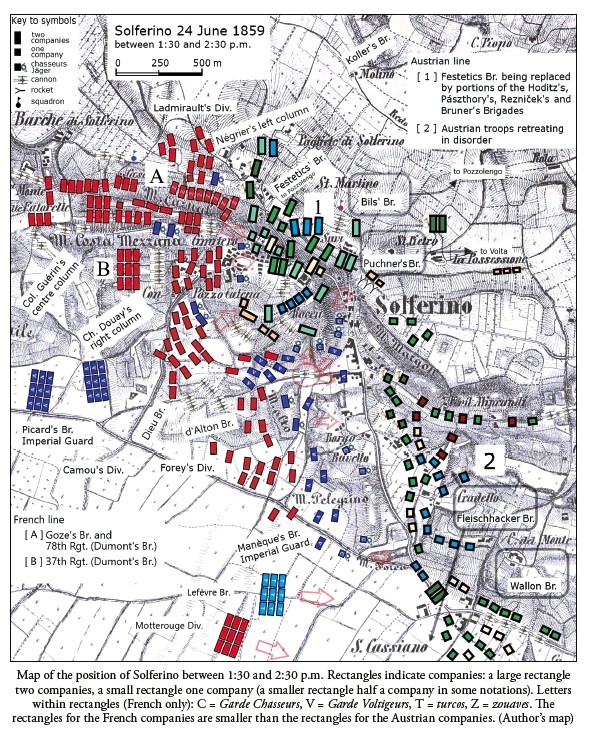
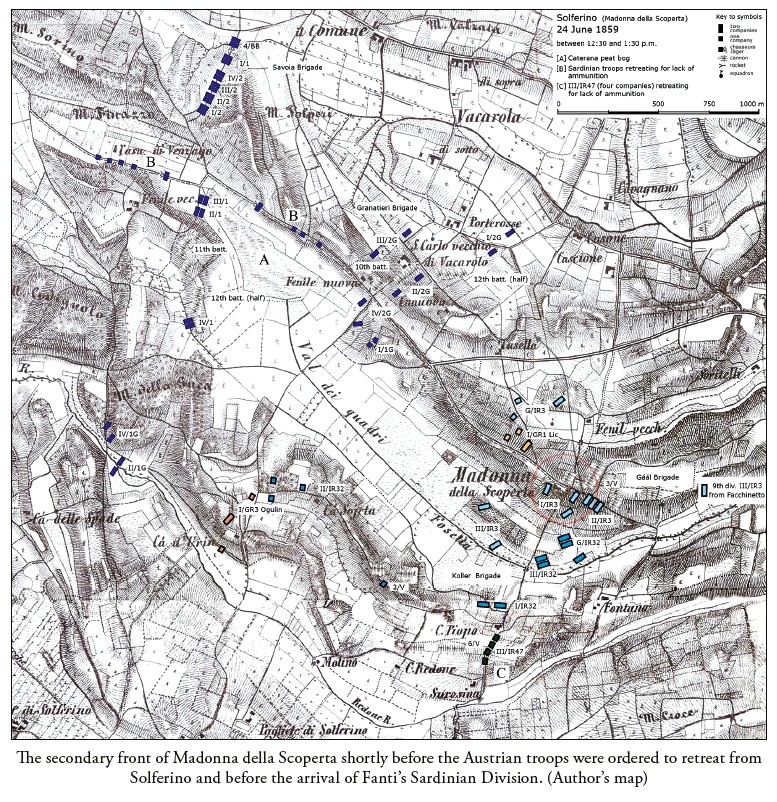
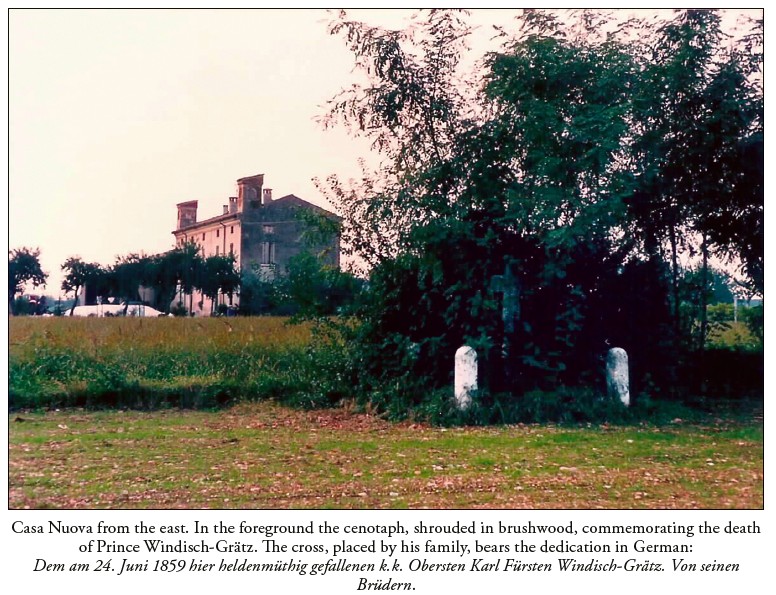
Today, the Battle of Solferino–San Martino is widely recognised as the birthplace of the Red Cross, yet the events of that day encompassed far more. This work, translated from the original Italian, has been enriched with newly produced and previously unpublished maps and images. It offers valuable insight for historians, military enthusiasts, and wargamers alike, all of whom will appreciate the depth and precision of its account of the combat between Austrian, French, and Piedmontese forces.
This lucid and meticulously researched analysis sheds new light on events and individuals that have, until now, remained obscure. It examines in detail the long-range reconnaissance that prompted Emperor Franz Joseph I of Austria to resume the offensive against the allied armies of France and the Kingdom of Sardinia.
The deadly series of encounter battles fought by the three belligerent armies unfolded across three principal sectors: the plateau of San Martino to the north, the hilly terrain around Solferino at the centre, and the plains of Medole–Guidizzolo to the south. These engagements were conducted largely independently, with limited coordination between forces.
The fighting erupted with ferocity—first at Medole, then along the ridge running from the Grole through Solferino to Cavriana, and further towards Volta Mantovana. Each clash is carefully analysed, described, and interpreted, drawing on a comparative study of subordinate commanders’ reports preserved in state and military archives. Particular attention is given to the Austrian Alte Feldakten, held in the extensive archival repositories of Vienna.
Finally, the work provides a long overdue reconstruction of the role played by Venetian soldiers serving in the imperial Wernhardt Regiment, recruited from the provinces of Treviso and Venice— men whose contributions have, until now, been largely overlooked by history.
"Decision in Lombardy treats the Battle of Solferino, fought on 24 June 1859, as far more than a clash of armies. It presents it as a turning point in the fight for Italian unification and as an event with a wider place in nineteenth-century European history....One of the book’s real strengths is the way it combines clear explanation with a strong senseof atmosphere....Decision in Lombardy is worthwhile because it understands that the aftermath of the battle is part of its importance. The suffering, the political results, and the shock caused by the battlefield are all shown as consequences that reached well beyond 1859. For anyone interested in military history, Italian unification, or the early roots of modern humanitarian concern, this is a concise and engaging study with a clear purpose. Certainly one for my bookcase and a book anyone with an interest in this campaign and the story of Italian unification should enjoy". carryingsonupthedale.com Blog