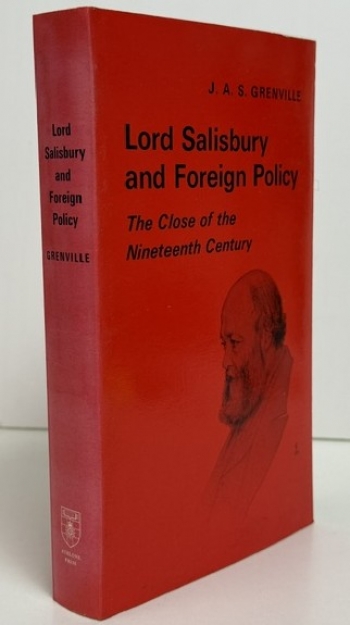
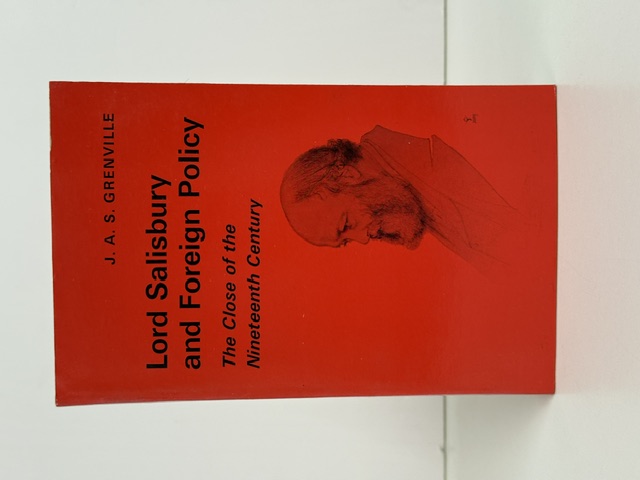
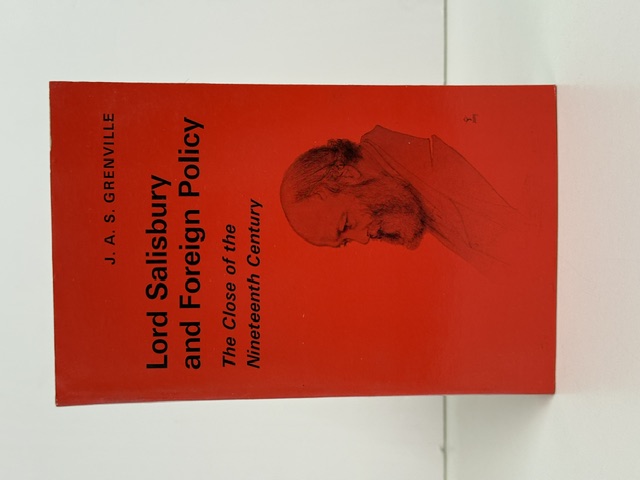
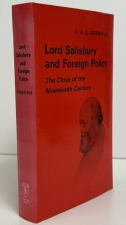
Second Hand Lord Salisbury and Foreign Policy
The Close of the Nineteenth Century
Author : J. A. S. Grenville
£25.00 FREE UK delivery on orders over £30
Despatched within 1-2 working days
Please click here to view our Terms & Conditions when purchasing Second Hand Books.
Condition
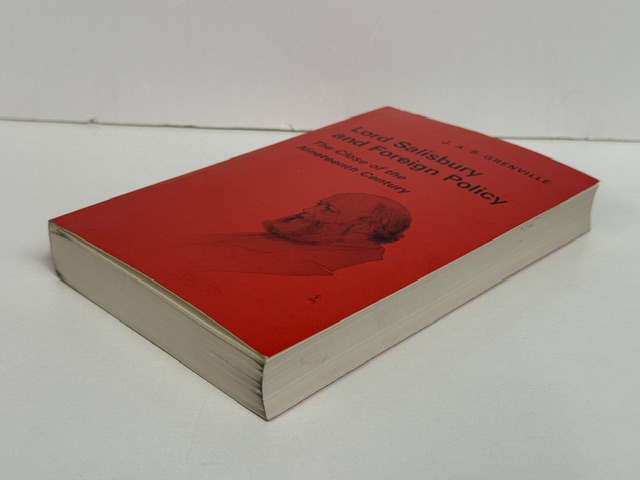
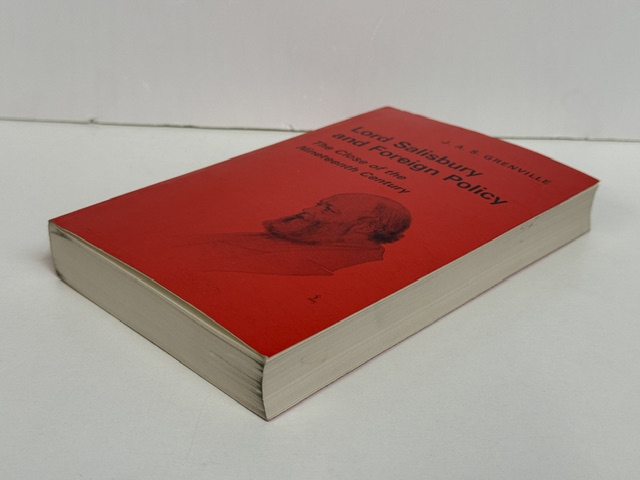
Very Good condition. Paperback with light general shelf and handling wear. The covers show minor rubbing and slight edge wear, with some age-related fading.
The binding appears firm and secure. The page block shows light age-toning but remains clean. Internally, the pages appear generally clean and unmarked, with no substantial annotations, highlighting or loose pages.
Details
General - Pages : 451 | Images : No illustrations | Publisher : The Athlone Press, University of London | Place of Publication : London, UK | Language : English
Paperback - Year of Publication : 1970 | Edition : First paperback edition, with corrections. | Size : 198mm x 126mm | ISBN : 0485120143


Click images to enlarge
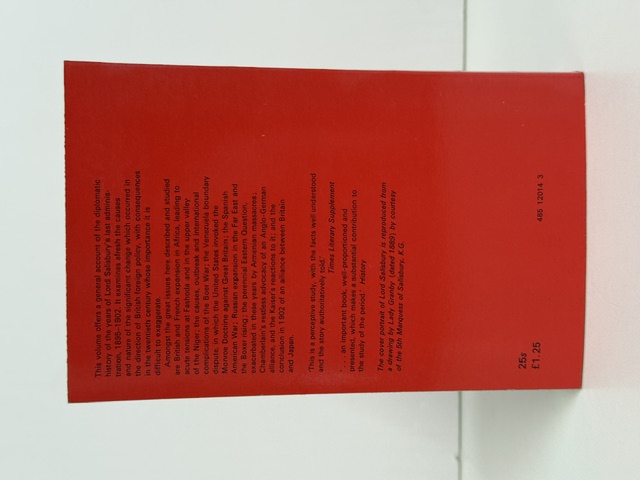
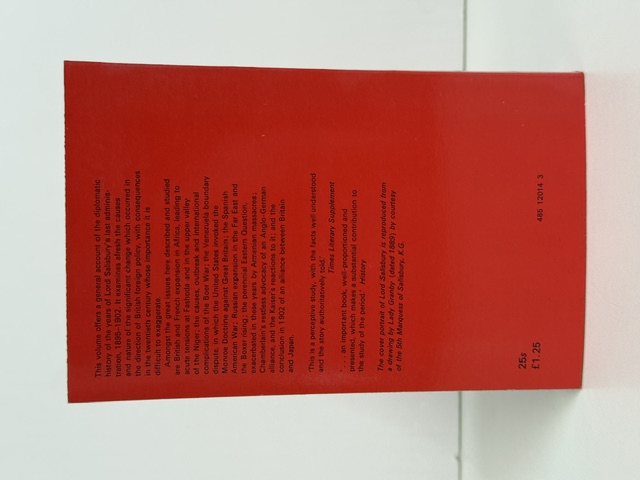
J. A. S. Grenville’s detailed study of British foreign policy under Lord Salisbury during the closing years of the nineteenth century.
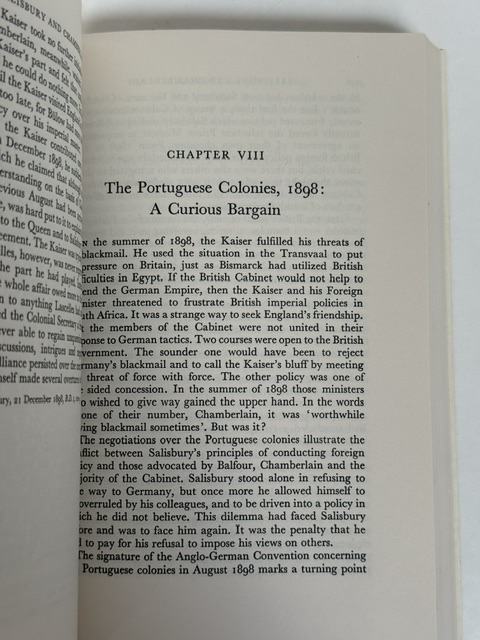
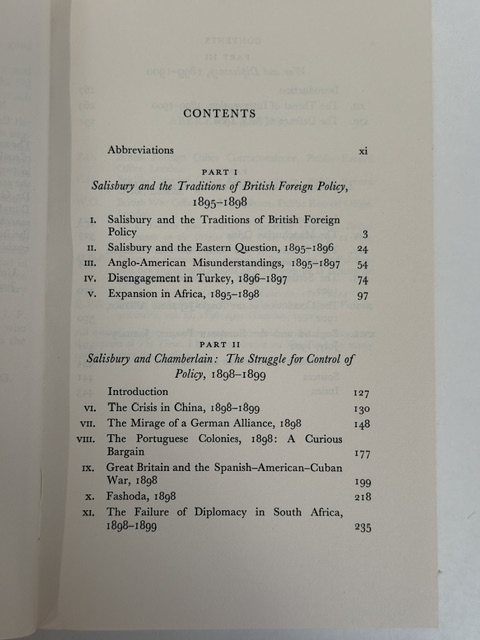
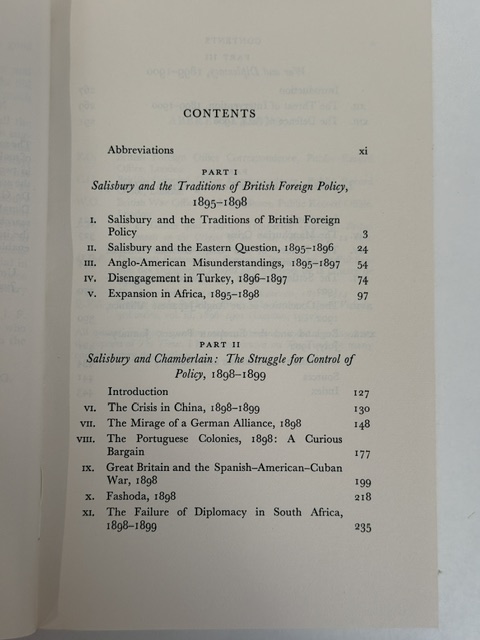
The book examines the major diplomatic and imperial questions that confronted Salisbury between 1895 and 1899, placing his policies within the wider traditions of British foreign policy. Grenville considers Salisbury’s approach to the Eastern Question, Anglo-American relations, imperial expansion in Africa and the growing strategic pressures facing Britain at the end of the Victorian era.
A major section is devoted to the increasingly difficult relationship between Salisbury and Joseph Chamberlain, particularly over the direction and control of foreign policy. The study covers the crisis in China, the possibility of an Anglo-German understanding, the Portuguese colonial question, the Spanish-American War and the growing tensions in South Africa that would culminate in the Second Boer War.
Grenville’s analysis combines diplomatic history with an assessment of the competing personalities, strategic assumptions and imperial interests shaping British decision-making. The work remains a useful study of Britain’s transition from the relative security of mid-Victorian predominance to the more complex international environment of the late nineteenth century.