
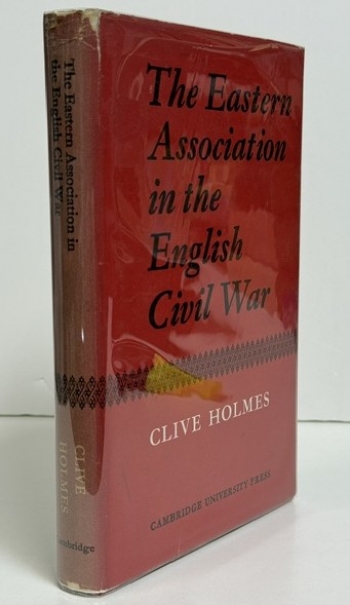
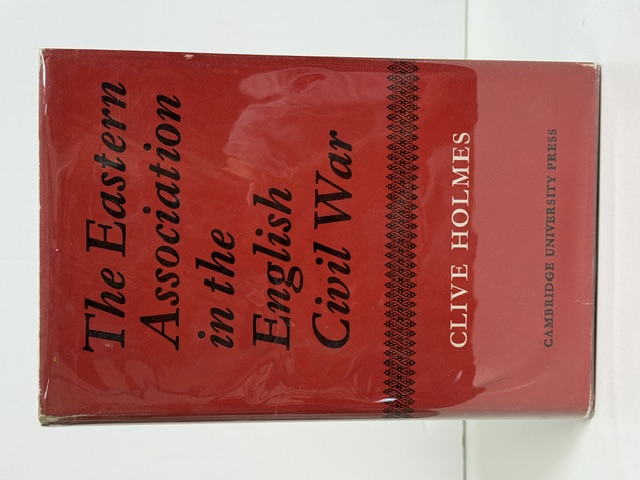
Second Hand The Eastern Association in the English Civil War
Author : Clive Holmes
£30.00 FREE UK delivery on orders over £30
Despatched within 1-2 working days
Please click here to view our Terms & Conditions when purchasing Second Hand Books.
Condition
Good in near good dust jacket. The dust jacket shows general age-related wear, rubbing, fading and surface marking, with creasing, small chips and wear at the corners and spine ends.
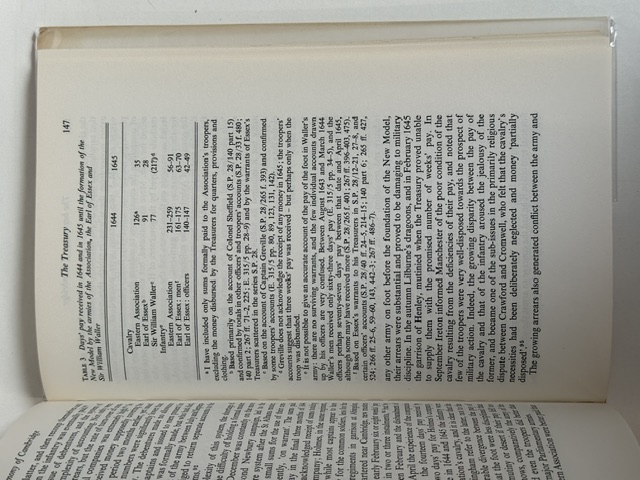
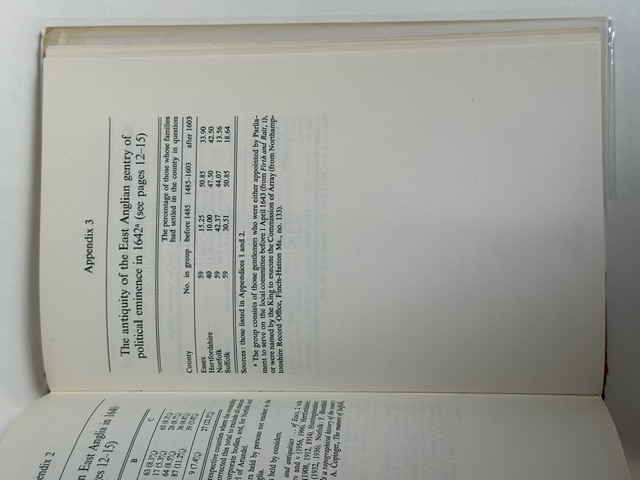
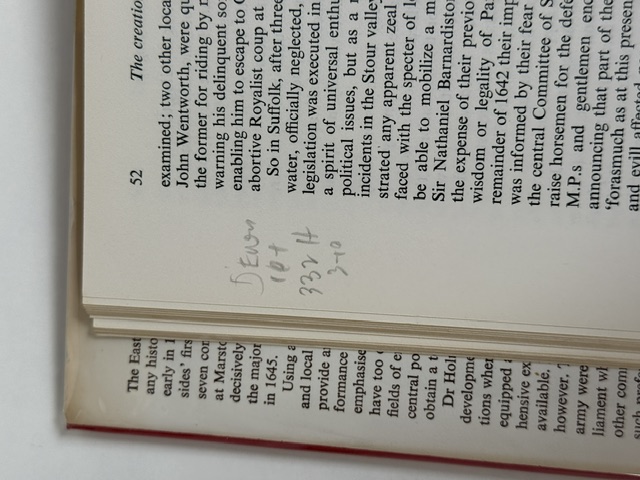
The boards and binding appear firm and secure. The page block shows light age-toning. There is a handwritten pencil notation to page 52. Internally, the remaining pages appear generally clean, with the tables and text clear and legible.
Details
General - Pages : 332 | Images : Maps and statistical tables. | Publisher : Cambridge University Press | Place of Publication : Cambridge, UK | Language : English
Hardback - Year of Publication : 1974 | Edition : First edition | Size : 224mm x 150mm | ISBN : 0521204003
Click images to enlarge
Clive Holmes’s important study of the Eastern Association, the Parliamentarian alliance of eastern counties that became one of the most effective political and military organisations of the English Civil War.
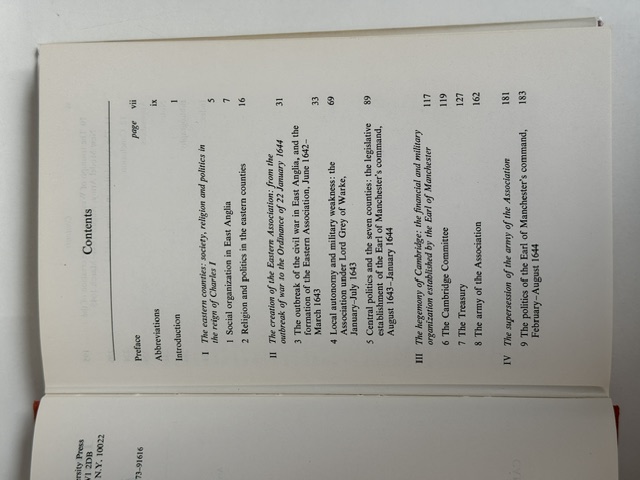
Holmes examines the social, religious and political character of the eastern counties before tracing the creation of the Association from the outbreak of war through its formal development in 1643 and 1644. Particular attention is given to East Anglia, the political role of the local gentry, the administration and financing of the war effort, and the interaction between local communities and central Parliamentary authority.
The book explores the growing importance of Cambridge as the Association’s administrative and military centre under the Earl of Manchester, together with the organisation, funding and deployment of its army. The Eastern Association played a decisive role in the Parliamentary war effort, most notably at the Battle of Marston Moor in 1644, and its forces subsequently provided an important foundation for the New Model Army.
Drawing extensively upon national and local archival sources, Holmes combines military organisation, political history and local social analysis to explain why the Association was able to operate so effectively. The volume includes statistical tables, appendices, bibliographical references and an index.