London Pride: The London Territorial Force in Peace and War, 1908-1921 Volume 1
Peacetime, Society and the Transition to War
Series : Wolverhampton Military Studies #45
Editor : Charles Fair, Richard Hendry, Tom Thorpe

Print Editions
Hardback
£45.00 FREE UK delivery on orders over £30
Despatched within 1-2 working days
Details
General - Pages : 516 | Images : 71 b/w photos & illustrations, 7 b/w maps, 15 figures, 29 tables
Hardback - Date of Publication : 15th December 2025 | Size : 245mm x 170mm | ISBN : 9781804518144 | Helion Book Code : HEL2026

Click images to enlarge
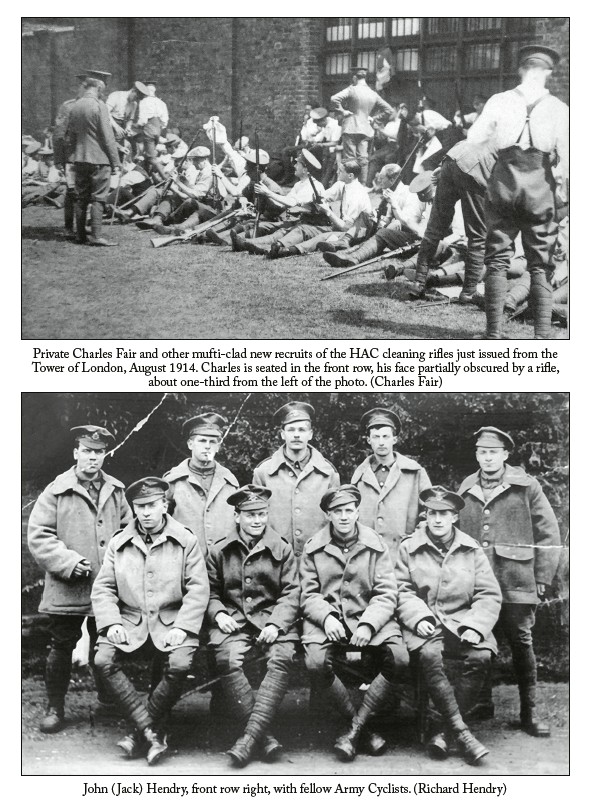
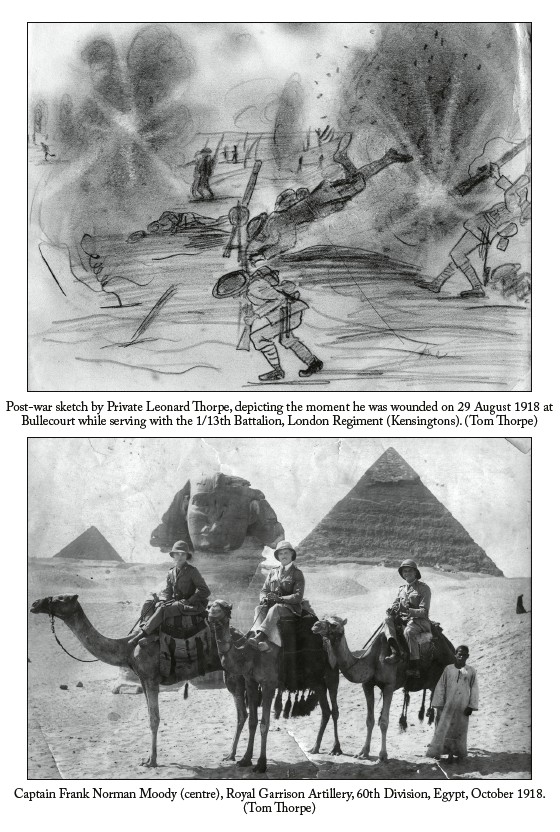
London Pride examines the vital yet often overlooked contributions of London’s Territorial Force from 1908 to 1921, exploring its unique structure, socioeconomic composition, military operations during the Great War and enduring legacy. It offers the first comprehensive study of the London Territorial Force, addressing gaps in existing historiography.
Based on extensive research and previously unpublished sources, London Pride explores the organisation of the Territorial Force, which consisted of infantry, artillery, engineering, medical and logistical units, each with distinct traditions and identities. It explores how class, occupation and geography influenced recruitment, providing insights into the Territorial Force’s connection to the social and economic fabric of Edwardian London.
London Pride also investigates the Territorial Force’s adaptation to the demands of modern warfare, analysing its learning processes, operational challenges and integration into the British Army. Beyond battlefield contributions, it examines the post-war experiences of Territorial Force veterans, including their roles in commemorative activities, Old Comrades Associations and the preservation of the force’s history.
This two-volume work provides a detailed and multifaceted exploration of the London Territorial Force and will appeal to historians of London as well as military and social historians. Volume 1 focuses on its formation, its social and economic context and the transition from peacetime to war. Volume 2 addresses its operational contributions during the First World War and the long-term legacy of its soldiers. Together, these volumes offer a nuanced understanding of the London TF’s significance in the military and social history of the early twentieth century, preserving the memory of its substantial and enduring impact.
Chapters of the book are as follows:
Foreword by Professor Gary Sheffield
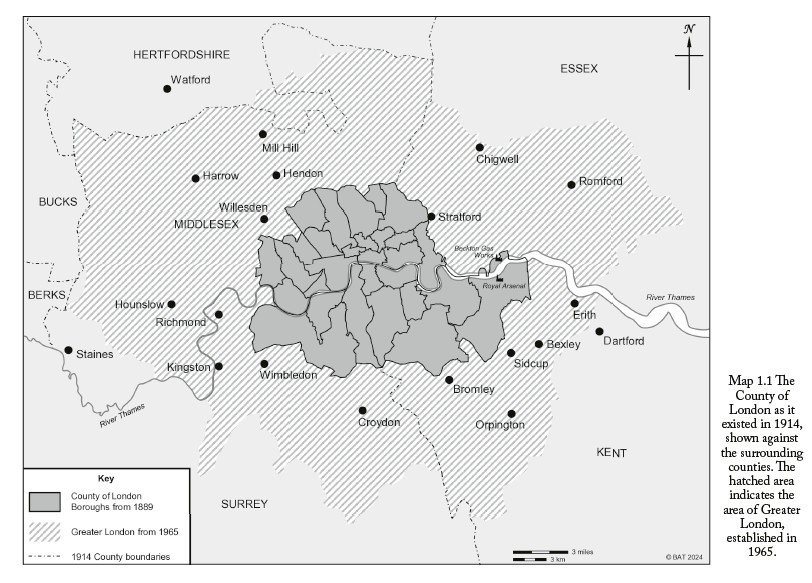
1 Edwardian London: A city at its Imperial Zenith (Charles Fair, Richard Hendry and Tom Thorpe)
2 Antecedents (Ian F.W. Beckett)
3 Establishing London’s Territorial County Associations (Bill Mitchinson)
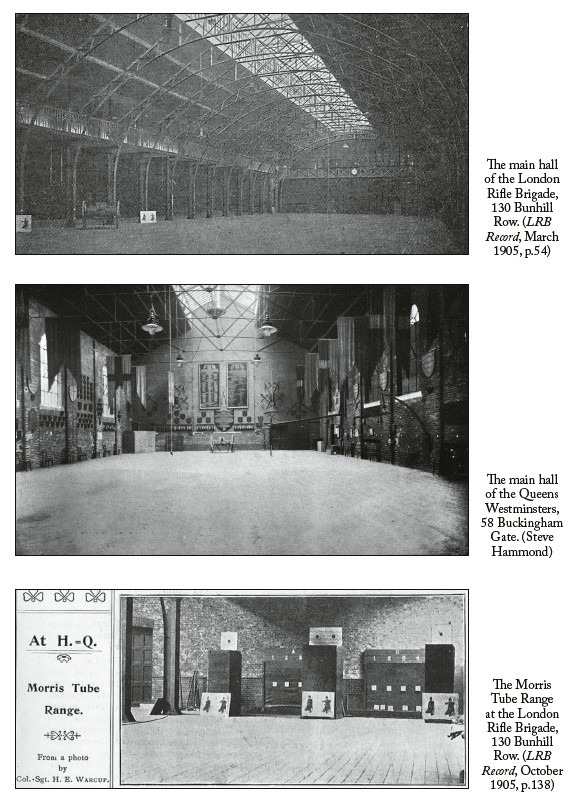
4 The Drill Halls of the London Territorial Force (Charles Fair)
5 Partial Failure or Qualified Success? Recruitment and Retention in the County of London Territorial Force 1908–1914 (Charles Fair & Richard Hendry)
6 From Prominence to Obscurity, from Uniformity to Diversity: The Experiences of the Engineer and Railway Staff Corps, 1865–1918 (Christopher Phillips)
7 The Same but Different: An Analysis of the Characteristics of London’s Territorial Units (Stephen Manning & Charles Fair)
8 Clubs, Communities and Networks: London Schools and the London Territorials in 1914 and 1915 (Tim Halstead)
9 Railwaymen of the Great Western Railway and the London Territorial Force (Sandra Gittins)
10 The London Irish at Peace and War 1908–1915 (Stephen Sandford)
11 The Men Who Sailed on The Australind: A Study of the 1st Battalion Artists Rifles (Michael Orr)
12 ‘We became loyal 19th men’: The Changing Character of the London TF 1914–1918 – The Case of the 19th Londons (Charles Fair)
13 The London Territorial Force and the Royal Flying Corps (Jonathan Davy)
14 Parliament, the London Regiment and the Question of Territorial Force Transfers (Bill Mitchinson)
15 Theatre of War: An Examination of the Role of Concert Parties in the London Territorial Force (Stephen Manning)
16 The London Regiment and its Chaplains 1900–1920 (Peter Howson)
17 Alexander Paterson and the Bermondsey Battalion (Harry Potter)
18 Will the Real Patrick MacGill Please Stand Up? Changing Perspectives on the Experience of War in the Writings of Rifleman No. 3008, a.k.a. ‘the navvy poet.’ (David Taylor)
19 Henry Williamson, Chronicler of Nature and War (John Akeroyd)
20 The Hazeley Wail, Fusilier Whisper and Bleatings: An Examination of the Periodical Publications Produced by Units of the London Territorial Force in the First World War (Sarah Paterson)
21 Bringing John Smith Back to Life: A Chance Find and a Willesden Man’s Experience of War (Chris Baker)
Appendices
1 London Territorial Force Units and Their Drill Hall Locations, 1908–1914 (Charles Fair)
2 The Colours of the Battalions of the London Regiment (Derrick Harwood)
3 Strength of London TF Infantry and Yeomanry Units 1908 to 1914 (Charles Fair)
"The twenty contributors to this volume have given us a remarkable testament to London in the Great War that will preserve its memory for all time and, importantly, sets a standard to be lived up to and a challenge to other regional groups of historians to do the same for their cities." Stand To! - Journal of the Western Front Association
"It is an amazing blend of social, economic and military history… The book is a model and handbook of how to conduct research into any aspect of the First World War. Every contributor explains fully how he or she conducted their research, rigorously analyses their findings, criticises them where necessary and suggests areas of further work. It is an exemplar of the ‘new’ military history that embraces multiple intellectual disciplines." Journal of the Society for Army Historical Research
"London Pride achieves its ambitious objectives and is a fascinating, well researched and well written, analysis and of relevance to all students of the London TF. Packed full of facts and heavily footnoted London Pride should be on the shelves of all with an interest in the TF units of London and it will appeal more broadly to military historians and all with an interest in the First World War and in the economic and social fabric of London. Do not be misled or put off by the title of the project and book which in the twenty-first century has very different connotations than it did a hundred twenty years ago. The Editors are keen to explain that the name London Pride comes from a flower, Saxifraga urbium, seen growing on graves of London Regiment soldiers in The London Cemetery, facing High Wood in France. Recommended, I look forward to the second Volume." Military Historical Society